
Headshot vs Portrait: What's the Difference & Which Do You Need in 2026?

You need a photo for your website. Do you ask for a "headshot" or a "portrait"?Most people use these terms interchangeably, but in the photography world, they mean two very different things. Ordering the wrong one can leave you with a photo that doesn't fit your website layout or misses the mark on your brand message.
At Peyman Khorram Photography Studio in Richmond Hill, we clarify this distinction daily. Here is the definitive guide to choosing the right format for your needs.
1. The Crop (Framing)
Headshot: Tight. Shoulders up. The top of the head might even be slightly cropped.
Focus: 100% on the face and expression.
Goal: Immediate recognition. "This is what John looks like."
Usage: LinkedIn profile picture, email signature, company directory, actor casting thumbnail.
Portrait: Wide. Waist up, 3/4 body, or full body. Includes hands and environment.
Focus: Body language, context, mood, clothing style.
Goal: Storytelling. "This is who John is and what he does."
Usage: Magazine feature, "About Me" page, book cover, speaking engagement poster.
2. The Background (Context)
Headshot: Neutral. Solid white, grey, black, or a very blurred (bokeh) nondescript background.
Why: To ensure nothing distracts from the face. It must be clean and readable even at 60x60 pixels.
Portrait: Environmental. An office, a library, a city street, a studio set with props.
Why: To add layers of meaning. A chef in a kitchen tells a story. A lawyer in a library tells a story. The background is a "secondary character."
3. The Lighting (Mood)
Headshot: Even. Flat. Flattering. (Beauty Dish or Large Octabox).
Why: To minimize shadows and imperfections. We want you to look approachable, awake, and friendly.
Portrait: Dramatic. Directional. Shadows. (Rembrandt or Split Lighting).
Why: To create depth and atmosphere. A portrait can be moody, serious, artistic, or whimsical. Shadows define character.
Case Study: The Real Estate Agent
Needs a Headshot: For her business card. A clean, smiling photo on a white background that can be cut out and placed on signs.
Needs a Portrait: For her website homepage. A shot of her leaning on a kitchen island in a luxury home, holding a tablet, looking welcoming. This sells the lifestyle she represents.
Case Study: The Author
Needs a Headshot: For the back flap of the book. A simple photo of their face.
Needs a Portrait: For the press kit. A photo of them sitting in a leather chair, holding a pen, surrounded by books. This sells the genre (e.g., Mystery author in shadows, Romance author in sunlight).
Which One Should You Book?
Book a Headshot Session if:
You just need a photo for LinkedIn/Social Media profiles.
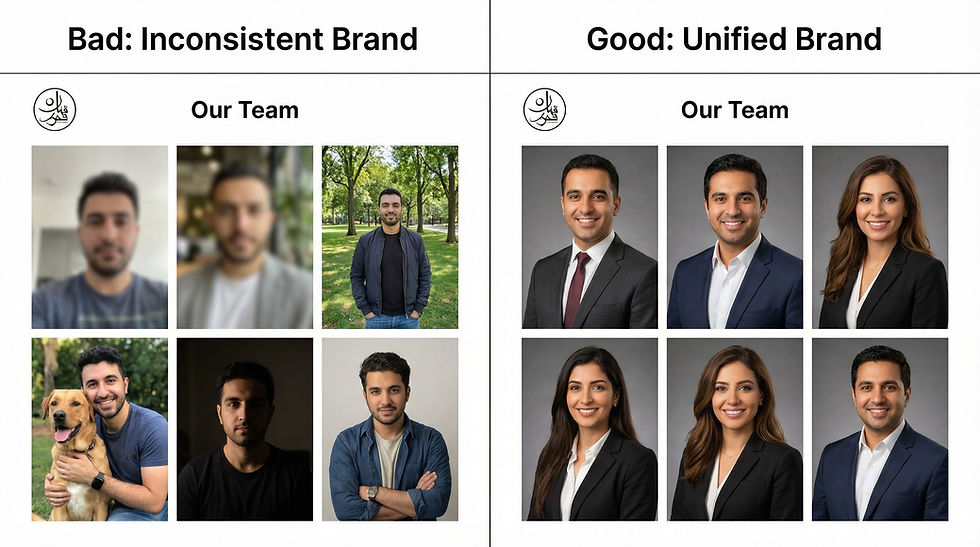
Your company requires a standardized look for the "Team" page.
You are an actor needing a casting photo.
Budget is tight (Headshots are generally faster/cheaper).
Book a Portrait Session if:
You are building a personal brand website.
You need content for Instagram/Blog posts.
You are being featured in a magazine or article.
You want to show your workspace or tools.
The "Hybrid" Session:Most of our clients at Peyman Khorram Studio choose a Hybrid Package. We spend 20 minutes getting the perfect clean Headshot, then 40 minutes doing creative Portraits with outfit changes and different lighting. This gives you a complete library of assets for every platform.
Don't Limit Your Brand
A headshot is a handshake. A portrait is a conversation.You likely need both to succeed in 2026.
Book your Hybrid Session today.Visit peymankhorram.com/services to see examples of both styles.



Comments